The One Health Research Group is happy to tackle any wildlife health issue and use our knowledge, skills and networks to provide holistic solutions that will benefit humans, animals and the environment.
The One Health Research Group provides advice on wildlife health issues to the general public, private companies, state and national governments and international bodies such as the IUCN and the World Organisation for Animal Health (OIE).
We provide a wide range of expertise to address important research needs in wildlife health relevant to conservation (in-situ and ex-situ), animal welfare and diseases with significance to livestock and public health. Members of this research group can offer great expertise in a wide range of disciplines, including microbiology, virology, parasitology, epidemiology, toxicology, conservation health, wildlife medicine and disease ecology. For example, current projects include Disease Risk Analyses for 1) Victorian wildlife (for DEECA) and 2) Phillip Island penguins (for Phillip Island Nature Park). We are also involved in programs for passive koala disease surveillance and active penguin surveillance.
We have established many valuable collaborations with other university-based research teams nationally and internationally and CSIRO, as well as with end-user organisations such as: Wildlife Health Australia; the Australian Government Department of Agriculture, Water and the Environment; Zoos Victoria; the Victorian Department of Energy, Environment and Climate Action; Parks Victoria and Phillip Island Nature Park.
These relationships allow us to offer truly multi-disciplinary research teams and projects and to tailor solutions to wildlife health issues that meet end-user needs. These services and capabilities are contained within a Wildlife Health Toolkit.
Wildlife Health Toolkit
The One Health Research Group, with collaborators, offer services and capabilities in the form of a comprehensive Wildlife Health Toolkit, which can be used to tackle any wildlife health issue.
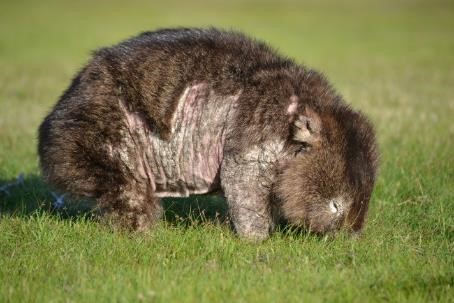
Our work has shown the severe impacts of sarcoptic mange in common wombats and we are now studying chemical treatment options.
Our Wildlife Health Toolkit can provide services in the following fields:
- Outbreak investigation into illness, death and species decline.
- Health assessment of species to determine their resilience to threatening processes.
- Risk analyses for wildlife health issues.
- Disease surveillance of wildlife species, including fieldwork for targeted issues, including pollution (Wildlife Health Surveillance: Victoria).
- Diagnostic capability for a wide range of health issues such as micro- and macro-parasites, including viruses.
- Epidemiological advice and analysis of wildlife health data.
Wildlife disease outbreak investigation
A specific service is outbreak investigation for wildlife to determine the causes and control of illness, death and species decline.
Outbreak investigation follows a well-developed methodology used across the medical and veterinary sciences.
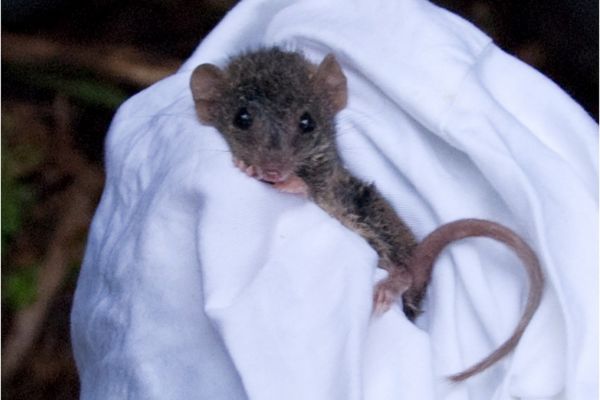
Disease surveillance may include assessing wildlife via general health examinations as well as sampling for specific pathogens.
These methods have also been very useful in understanding species decline and, for example, have determined that chytridiomycosis has caused the global decline and extinction of frogs.
The main steps we follow are outlined below:
- Case definition
- Differential diagnosis list
- Pattern of outbreak in space and time
- Risk factors for cases
- Tentative diagnosis
- Implement control
- Pathological examination
- Testing hypotheses
- Refine control
Development of management strategies for existing disease issues
The One Health Research Group can investigate drivers of and treatment options for endemic disease issues in wildlife populations, leading to development of effective management or mitigation strategies.
There are many endemic (existing, not necessarily changing in extent or severity) disease issues affecting Australian wildlife, which may have significant animal welfare or conservation impacts. Examples for this are sarcoptic mange in wombats and koalas, toxoplasmosis in marsupials or chytrid fungus in amphibians.
Unfortunately, there are still many unknowns, making effective management of these diseases difficult. We can help with:
- Basic research to addressing knowledge gaps: Working towards a solid understanding of the impacts of these diseases as well as the drivers of disease occurrence, leading on to
- Applied research: Developing and testing management solutions (eg: treatment, prevention, mitigation).
We have expertise in:
- Field-based studies
- Captive studies
- Laboratory-based studies.
Our collaborations with many colleagues both within and outside the Melbourne Veterinary School provide us with further access to a wide range of expertise (eg: modelling) and cutting-edge infrastructure.
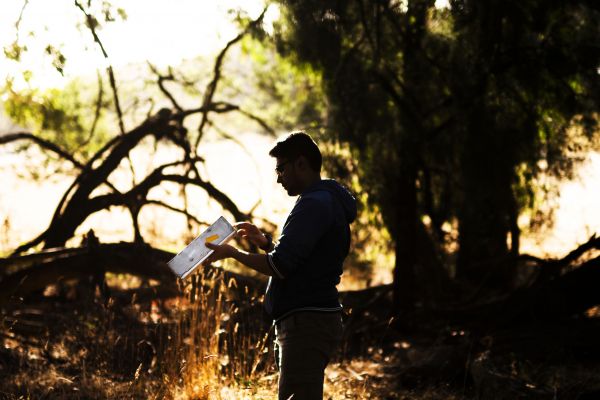
Epidemiological studies include assessing environmental drivers of disease.
Get in contact
To discuss how these services can be incorporated into your wildlife management or research program, please contact Prof Lee Skerratt.
To contribute to wildlife surveillance efforts
Contact Dr Pam Whiteley at Wildlife Health Surveillance: Victoria, if you observe wildlife mortality or other health issues.