Thirty one percent of the Australian adult population are affected by periodontal disease, resulting in pain, severe infection, tooth loss and wider health and social problems, yet current treatments are often expensive, progress slowly and are not accessible to everyone.
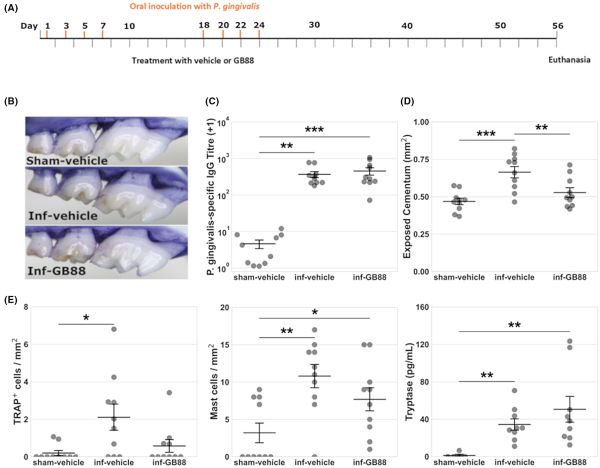
Therefore, there is a need to understand the molecular mechanisms involved in this disease and the associated bone loss to develop a cost-effective alternative. Using mice infected with a common gum-disease bacterium (Porphyromonas gingivalis), we found that mice treated with GB88-treated mice, a drug that blocks the protease-activated receptor-2 (PAR2) signalling, had significantly less bone loss, fewer bone-removing cells and lower levels of key inflammatory signals when compared to the placebo-treated group. This finding suggests that agents such as GB88 that inhibit PAR2 signalling can help bone and tooth loss in periodontal disease.
Learn more about this research