Overview
Unlike DVM clinical rotations, EMS placements do not involve formal teaching or training. Instead, they offer essential learning opportunities through hands-on experiences that supplement the curriculum, helping students become capable and confident veterinarians.
These placements can occur in veterinary practices, farms, research facilities, and other relevant environments. Students collaborate closely with academic mentors and arrange their placements with support from the Academic Support Office.
EMS at the Melbourne Veterinary School is divided into:
- Pre-clinical EMS (during first and second year) and
- Clinical EMS (during third and fourth year).
Pre-clinical Extramural Studies
12 weeks across DVM 1 and DVM 2
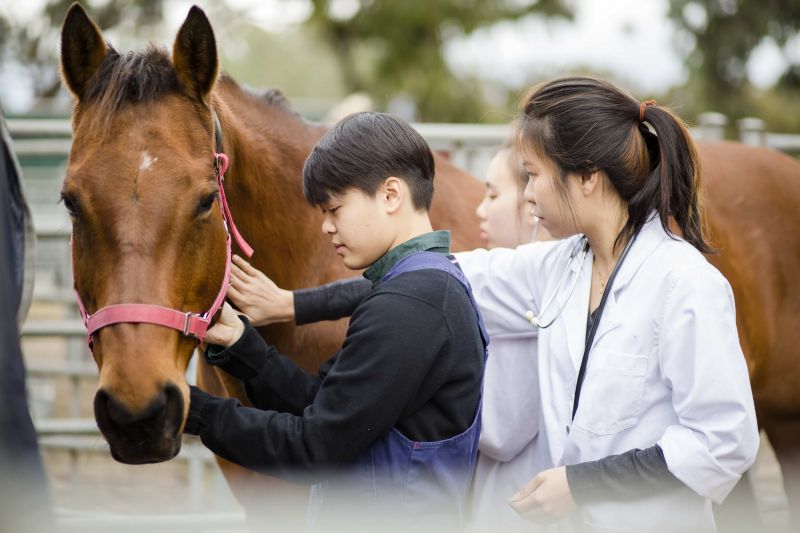
Pre-clinical EMS for veterinary students provide practical learning experiences outside the university setting, typically before they enter their clinical training years.
These placements are primarily observational, allowing students to learn animal handling, basic procedures, and the overall operations of veterinary practice. They are designed to complement theoretical coursework and prepare students for clinical practice.
Students must complete 12 weeks (60 days) of pre-clinical EMS placement at various animal enterprises before the end of the mid-semester break in DVM 2 Semester 2.
Students must satisfy the minimum number of days for three animal enterprise categories:
- Type A Enterprises (Extensive grazing: beef cattle, dairy, sheep, goats, alpaca, deer, horses)
- Type B Enterprises (Intensive production: pigs, poultry, feedlot, commercial pet bird breeding, boarding of dogs, cats and birds)
- Type C Enterprises (Zoos, wildlife refuges, welfare, educational farms).
Pre-placement requirements
- Students must have an up-to-date Q-Fever vaccination status. All commencing DVM students will be given instructions by the University once they have been admitted into the course.
- Undergo compulsory training in basic animal handling and assessment of animal behaviour in DVM 1 and further training in DVM 2.
Pass the safe-handling assessments for dogs, cats, horses (which covers other large mammals like camels), cattle and sheep (which covers alpacas). - Students must book all placements through the online system Sonia and must abide by the DVM EMS Pre-clinical Extramural Rules and Regulations, which students can find when they log into Sonia.
- All EMS placements must be pre-approved by the EMS Pre-clinical Coordinator. They must be listed on Sonia with a status of ‘approved’ prior to the placement start date.
- Students submit a signed ‘Completed Placement Form’, provide feedback about the placement for other students and submit a short report about the placement within two weeks of the last day of placement.
Clinical Extramural Studies
21 weeks across DVM 3 and DVM 4
Clinical EMS occurs in the third and fourth years of the DVM program, following completion of pre-clinical coursework. These experiences provide students with practical, hands-on learning in diverse veterinary settings outside their home institution.
Students must complete 21 weeks of clinical EMS over these two years with at least 50% of clinical EMS required to be completed in Australian practices.
Students have the opportunity to undertake clinical EMS placements in various contexts, noting that there are specific requirements regarding the number of weeks required in each animal type category. These areas include:
- Small animal primary care and referral services
- Equine primary care and referral services
- Production animal primary care and referral services
- Other settings such as zoos and wildlife centres, exotics, research, and veterinary related industries under the supervision of a veterinary practitioner.
Pre-placement requirements
DVM students must have completed all their pre-clinical placements before commencing their clinical EMS placements.
- Students must complete a total of 21 weeks of clinical EMS placements by the end of the clinical teaching year and per the requirements outlined in the VETS90096 Handbook.
- Students must have successfully passed all components of DVM 2 before commencing EMS Weeks 1-4. Please see EMS Placement Booking below for further details.
- Students must have successfully passed all components of DVM 3 before commencing EMS Weeks 5-21. Please see EMS Placement Booking below for further details.
- Students must book all placements through the online placement system, Sonia, and must read and abide by the DVM Clinical Extramural Rules and Regulations, which students can find when they log into Sonia.
- Students must complete the self‐evaluation and practice feedback on Sonia within 7 days of completing a placement.
Intended learning outcomes of EMS placements
- Develop communication and teamwork skills.
- Apply legal, ethical and welfare principles across a range of veterinary contexts.
- Develop an understanding of practice management and economic considerations.
- Develop animal handling skills across the range of common domestic species.
- Apply principles of epidemiology and biosecurity across a range of veterinary contexts.
- Engage in supervised case management and clinical procedures in a variety of species.
- Network and develop connections in the industry to help gain employment.