New home for amphibians at Werribee campus
A new state-of-the-art facility – the Werribee PC2 Amphibian Accommodation project – has been completed at Werribee campus.
Designed to house aquatic animals, biosecurity level two pathogens and genetically modified organisms, the facility will enable researchers to study important infectious diseases of aquatic animals.
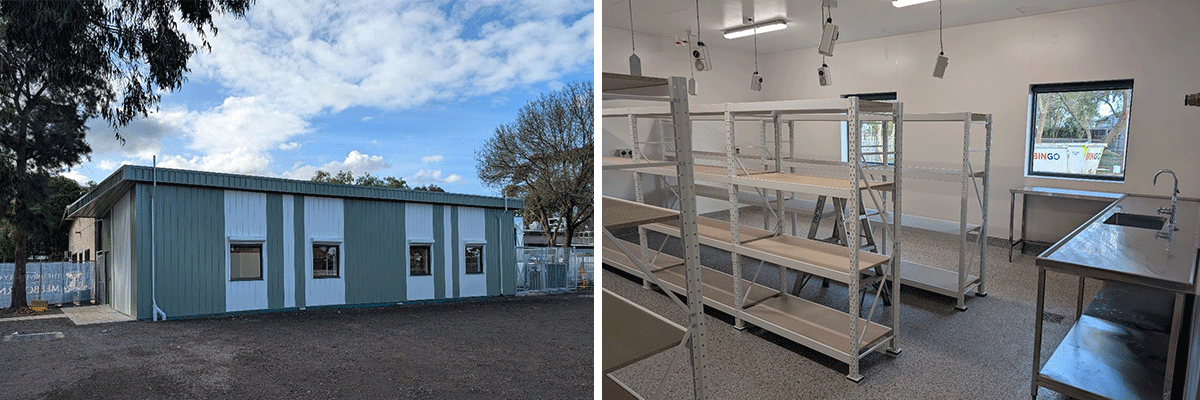 The new Amphibian Accommodation at Werribee
Using advanced genetic tools, researchers hope to develop sustainable solutions – including breeding disease-resistant animals for reintroduction into the wild.
Initially, the facility will house the critically endangered Southern and Northern Corroboree frogs with the hopes of finding long term solutions to chytridiomycosis – a deadly infectious disease causing major biodiversity loss in amphibians.
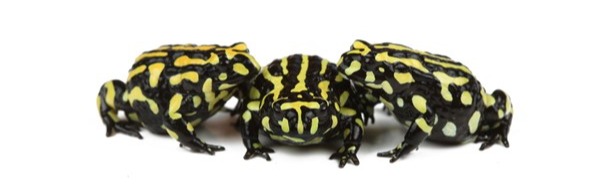
Southern corroboree frog (credit: Corey Doughty)
Over time it will house many of the more than 40 Australian species threatened by this same disease.
The facility will also house species that show natural resistance to the disease, helping scientists better understand immunity mechanisms, along with model amphibian laboratory species such as African clawed frogs.
Professor Lee Skerratt said the facility is the vision of the University, Faculty of Science, Melbourne Vet School and the One Health Research Group.
“The need arose out of the global decline and extinction of amphibians in the late 1970s that continues today,” Professor Skerratt said.
“For 15 years, the cause remained a mystery until University of Melbourne Associate Professor Lee Berger discovered chytridiomycosis and its impacts in 1998.”
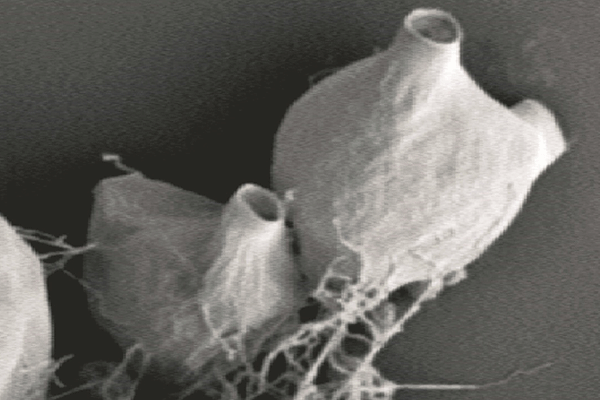
Amphibian chytrid fungus (Scanning electron micrograph) (credit: Lee Berger)
In partnership with organisations including Zoos Victoria, Taronga Conservation Society and the NSW Department of Climate Change, Energy, the Environment and Water and other research institutions, University of Melbourne researchers have been working towards restoring amphibian diversity and abundance to the wild.
"Australia is particularly vulnerable to introduced exotic pathogens due to its long isolation from the rest of the world,” Professor Skerratt said.
“In an increasingly globalised world this threat is worsening and whilst border biosecurity is our best defense, inevitably, devastating outbreaks such as chytridiomycosis will occur and we need to develop the tools and methods to better manage them,
“This facility is a major step towards creating that capability.”